

ED Isn’t Just Physical: Lifestyle & Mental-Health Links
Erectile dysfunction (ED) often gets talked about like a plumbing problem — something purely mechanical. The reality is more interesting, and a lot more hopeful. For many men, ED is tangled up with how they sleep, drink, move and feel. That’s not bad news: it means there are usually more levers to pull than a single tablet, and that small changes can make a real difference.
The 30-second version
- ED can be physical, psychological, or — very often — a mix of both.
- Stress, anxiety, depression and performance anxiety are common contributors. And ED can feed those feelings straight back, creating a loop.
- Lifestyle matters: smoking, heavy drinking, carrying extra weight, being inactive and poor sleep all play a part.
- Persistent ED can occasionally be an early warning sign of heart or circulation problems, so it’s worth getting checked — not panicking over.
- The good news: lifestyle changes, mental-health support and medication all help — and they work well together. You don’t have to pick just one.
It’s rarely “just physical”
An off-night here and there is normal. It’s usually down to stress, tiredness or one too many drinks, and it’s nothing to worry about. It’s when ED keeps happening that it’s worth understanding why — because the cause is often a blend of body and mind.
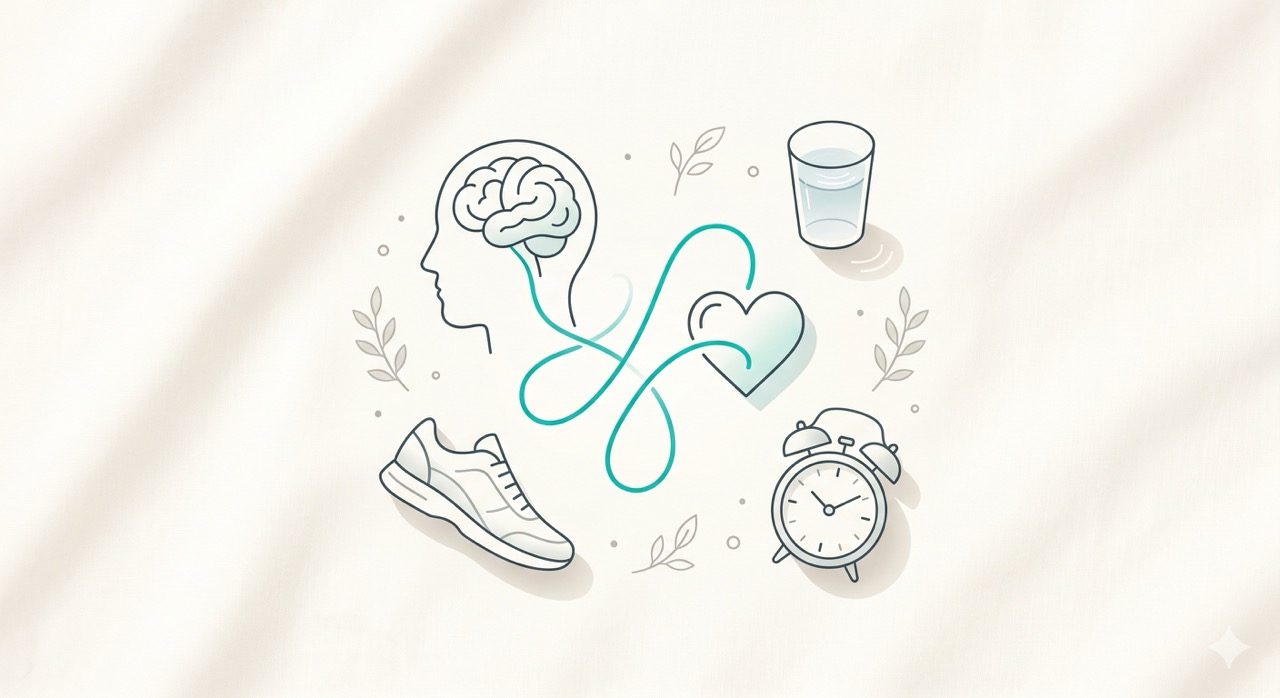
The two sides feed each other. Say a health condition makes erections harder one evening; that can spark worry, and the worry itself makes the next time more likely to go the same way. Before long it’s hard to tell where the physical ends and the psychological begins. That’s not a flaw in you — it’s just how the body and brain are wired, and it’s exactly why looking at the whole picture works better than chasing one cause.
The mental-health links
Getting an erection isn’t purely physical plumbing — it starts with arousal in the brain. So when your head’s full of other things, your body often follows. The usual suspects:
- Stress. Work pressure, money worries, big life changes — chronic stress shows up in the body, and the bedroom is no exception.
- Performance anxiety. One disappointing night can turn into a fear of the next one, which makes it more likely to happen again. This self-fulfilling loop is one of the most common causes in younger men, and one of the most treatable.
- Depression and low mood. Low desire and difficulty with erections are common when you’re low. Worth knowing: some antidepressants can also affect erections — which is a reason to talk to a clinician, never a reason to stop your medication on your own.
- Relationships. Tension, disconnection or unresolved conflict with a partner can quietly sit behind ED, too.
None of this means it’s “all in your head” or that you’re imagining it. The effects are real and physical. It just means your mind is part of the toolkit for fixing it.
The lifestyle links
Erections are all about blood flow, so anything that affects your circulation tends to affect them too. The big ones:
- Smoking. It damages blood vessels and narrows the arteries that feed an erection. The flip side is encouraging: stopping smoking can genuinely improve things over time.
- Alcohol. A little is fine, but drinking heavily makes it harder to get and keep an erection — the classic “brewer’s droop” — and regular heavy use can have a longer-term effect.
- Weight and diet. Carrying extra weight is linked to ED, partly through its effect on blood vessels and hormones. A heart-healthy, Mediterranean-style diet supports both. If weight is part of your picture, our weight-loss pathway can help.
- Activity. Regular exercise improves blood flow, mood and weight all at once — one of the most reliable lifestyle levers there is.
- Sleep. Poor or broken sleep affects hormones, energy and desire. Aiming for a steady 7–9 hours helps more than people expect.
- Recreational drugs. Several can contribute to ED, and some — like poppers — are dangerous alongside ED medication.
The bit people miss: your erections and your heart
Here’s something that surprises a lot of men. The arteries that supply the penis are smaller than those around the heart, so when arteries start to narrow (a process called atherosclerosis), the penis can feel it first. That means persistent ED can sometimes be an early flag for heart and circulation health — occasionally appearing years before any other sign.
This isn’t cause for alarm — it’s a useful prompt. It’s a good reason to get persistent ED looked at properly, and a reassuring one too: the same heart-healthy habits that protect your circulation tend to improve erections as well. One conversation can tick both boxes.
What actually helps
Because ED usually has more than one cause, the best results usually come from more than one fix:
- Lifestyle changes — stopping smoking, moving more, easing off alcohol, eating well and sleeping better. These take weeks to months, not minutes, but they pay off across your whole health.
- Support for your mind — talking therapies, counselling or simply addressing the anxiety loop can be powerful, especially where stress or performance anxiety is involved.
- Medication — ED tablets can work well even when the root cause is emotional, and can help break the anxiety cycle by restoring confidence. Many men use them alongside lifestyle and mental-health changes, not instead of them.
The takeaway: you don’t have to choose between “fix my lifestyle” and “get a prescription”. The two work best as a team, and a clinician can help you build the right mix for you.
Let’s look at the whole picture
A short, confidential online consultation lets a UK-registered clinician understand what’s really going on — physical, lifestyle and mental health — and recommend a plan that fits your life. No waiting rooms, no awkward conversations at the counter.
When to relax, when to check in, when to act
Usually normal
The odd off-night after a stressful day, a late one, or a few too many drinks. This happens to most men at some point and usually sorts itself out. It’s not a diagnosis.
Check in with a clinician
It’s worth a conversation if ED has been happening regularly for a few weeks or more; if low mood, anxiety or loss of interest in things you usually enjoy is hanging around; or if you suspect a medicine (such as an antidepressant or a blood-pressure tablet) might be playing a part. Don’t stop any prescribed medicine yourself — just raise it, and your options can be reviewed.
Get help now
If you’re struggling to cope, feeling hopeless, or having thoughts of harming yourself, you deserve support right away. You can call Samaritans free on 116 123 any time, day or night, or call NHS 111. In an emergency, call 999.
And physically: chest pain, tightness or breathlessness during sex or exertion should never be ignored — call 999.
Frequently asked questions
Can stress and anxiety really cause ED?
Yes. Arousal starts in the brain, so when you’re stressed, anxious or distracted, your body often doesn’t respond the way you’d want. Performance anxiety in particular can become a self-feeding loop — and breaking that loop is very doable.
If the cause is “in my head”, will tablets still work?
Often, yes. ED medication can work even when the root cause is emotional, and by restoring confidence it can help calm the anxiety cycle. Plenty of men use it as a short-term confidence boost while they tackle the underlying cause.
Could my antidepressant be the cause?
It’s possible — some antidepressants and other medicines can affect erections. Don’t stop taking anything you’ve been prescribed. Instead, mention it to a clinician, who can look at whether a different option or an addition might help.
How quickly do lifestyle changes make a difference?
Usually weeks to months rather than overnight. Stopping smoking, moving more and improving sleep build up gradually — but they improve your overall health alongside your erections, so they’re worth it either way.
Should I see someone even if tablets are working?
If ED is persistent, yes. Because it can occasionally be an early sign of heart or circulation issues, getting checked is about more than the symptom in front of you — it’s a chance to look after the bigger picture.
Is this confidential?
Completely. Your consultation is private, reviewed by a UK-registered clinician, and any treatment is delivered discreetly.
Your care, all in one place
Once you’re a patient, your Trimu portal puts everything at your fingertips:
- Speak to a clinician — message our UK-registered team with any question about your treatment or what’s going on for you.
- Manage your prescription — reorder, adjust or pause your treatment without starting from scratch.
- Report side effects — flag anything you notice in a couple of taps, and we’ll review it.
Medical disclaimer
This article is general information about erectile dysfunction and its links to lifestyle and mental health. It is not a substitute for personalised medical advice, diagnosis or treatment, and it cannot tell you the cause of your own symptoms. Never start, stop or change a prescription medicine without clinical advice. Persistent ED should be assessed by a clinician, as it can be linked to underlying health conditions. If you experience a serious side effect from a medicine, you can report it through the MHRA Yellow Card scheme at yellowcard.mhra.gov.uk. If you are struggling to cope or having thoughts of harming yourself, contact Samaritans free on 116 123 or call 999 in an emergency. For chest pain, breathlessness or other emergencies, call 999. Trimu is a CQC-registered UK telehealth and online pharmacy service.