


How to Talk to a Clinician About ED
For a lot of men, the hardest part of erectile dysfunction (ED) isn’t the condition — it’s saying it out loud. If the thought of bringing it up makes you want to change the subject, you’re in very good company. The good news: talking about ED is easier than it’s ever been, and with the right approach (or the right service) you can skip most of the awkwardness entirely. Here’s how.
The 30-second version
- ED is extremely common — around half of men aged 40–70 experience it to some degree — yet only about a third ever ask for help. Clinicians have these conversations every single day.
- A few details make the conversation far more useful: when it started, whether it’s every time, your general health, any medicines, and your lifestyle.
- With Trimu, you don’t have to say any of it out loud. You start with a private intake form, and a clinician takes it from there.
- After review, a clinician will approve treatment, suggest an alternative, let you know if it’s not suitable right now, or open a secure chat to talk it through.
- The single most important thing? Be honest. It’s all confidential, and it helps the clinician keep you safe.
You’re far more normal than you think
It’s easy to feel like you’re the only one. You’re not, by a long way. Surveys consistently suggest around half of men aged 40 to 70 deal with some degree of ED, and plenty of younger men do too. Despite that, only about a third seek help — usually because of embarrassment, not because they don’t want a solution.
Here’s the bit worth holding onto: to a clinician, ED is a routine, everyday thing to discuss — no more awkward for them than a sore knee. The discomfort is almost always on the patient’s side, and it fades fast once you realise they’ve heard it a thousand times before.
Why it’s worth saying something
- It’s usually very treatable. Most cases can be managed effectively, often with a simple tablet.
- It can flag other health things. Persistent ED is occasionally an early signal worth checking — so the conversation looks after more than your sex life.
- It lifts a weight. ED can quietly chip away at confidence and relationships. Naming it is often the moment that starts to change.
What actually helps a clinician
Whether you’re filling in a form or speaking to someone, a few details make a real difference to how quickly you get the right answer. Have a think about:
- How long it’s been going on — weeks, months, longer?
- Whether it’s every time — or whether you still get morning erections, or erections during masturbation. This helps separate physical from psychological causes.
- Your general health — any conditions like diabetes, high blood pressure or heart issues.
- Any medicines or supplements — including ones from other sources and anything recreational. This matters for your safety, especially around nitrates.
- Lifestyle — smoking, alcohol, stress, sleep.
- What you’ve already tried, and what matters to you — spontaneity, frequency, or a particular concern.
You don’t need to have perfect answers. A rough picture is plenty — the clinician will fill in the gaps.
With Trimu, you don’t have to “have the conversation” out loud
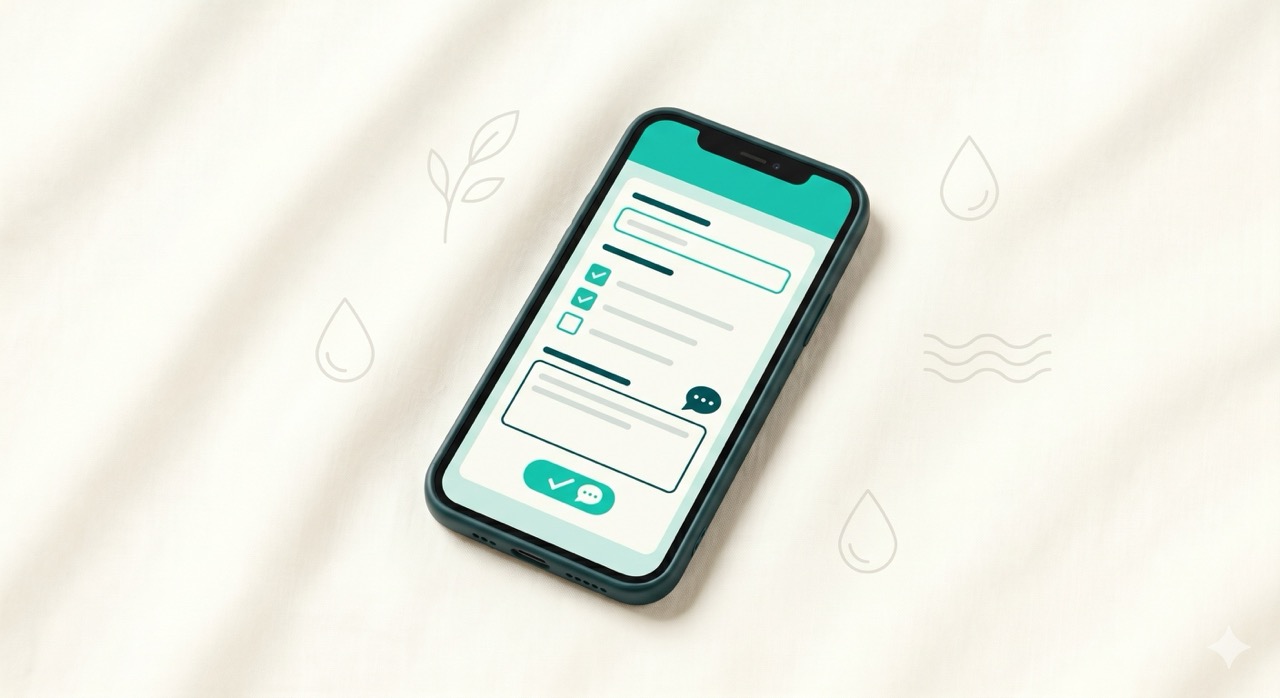
This is where it gets a lot easier. With Trimu, you don’t start by sitting across a desk or talking at a pharmacy counter. You start with a private online intake form.
- You answer a set of clear questions at your own pace, wherever you are — no waiting room, no counter, no eye contact required.
- The form is built to capture everything a clinician needs, so you’re not left wondering what to mention or how to phrase the awkward bits. The questions do that work for you.
- It’s confidential from the first tap.
Once you submit, a UK-registered clinician reviews your case. From there, one of four things happens:
- They approve treatment — if it’s safe and suitable, your treatment is arranged and dispensed.
- They suggest an alternative — a different option may suit you better, and they’ll explain why.
- They let you know if it’s not suitable right now — with a clear reason and what to do next, such as a check with your GP.
- They open a secure chat — if anything needs clarifying, they’ll message you to talk it through, on your terms.
So the “conversation” only happens if it’s actually needed — and even then, it’s a calm, written chat rather than a face-to-face moment you’ve been dreading. You can ask your own questions through the portal at any point, too.
If you’d rather speak to someone in person
Prefer talking to your GP or a pharmacist face to face? That’s completely valid, and a few small things make it easier:
- Lead with a simple opener — something like “I’ve been having trouble getting or keeping an erection” is all it takes. They’ll guide the rest.
- Jot a few notes first using the list above, so nerves don’t make you forget anything.
- Ask for a private space at the pharmacy if you’d rather not talk at the counter — most have a consultation room.
Skip the awkward bit
No waiting room. No counter. Just a few private questions, answered at your own pace, and a UK-registered clinician who takes it from there. It’s the easiest first step you’ll take all week.
Feeling nervous, needing a chat, or needing help now
Totally normal
Feeling awkward about raising ED. Almost everyone does at first. The intake form is designed precisely so you don’t have to find the words — you just answer the questions.
Worth raising in your form or chat
Be sure to mention persistent ED, any low mood or anxiety that’s hanging around, every medicine you take, and anything you suspect might be linked. Don’t leave things out to save embarrassment — the full picture is what keeps your treatment safe and effective.
Get help now
An online form isn’t for emergencies. Call 999 for chest pain or breathlessness during sex or exertion. If you’re struggling to cope or having thoughts of harming yourself, you deserve support right away — call Samaritans free on 116 123 any time, or NHS 111.
Frequently asked questions
Do I have to talk to someone face to face?
No. With Trimu you begin with a written intake form, not a conversation. A clinician only messages you if something needs clarifying — and even then it’s a secure chat, in your own time.
What if I get embarrassed halfway through?
Because the form is private and self-paced, there’s no one watching and no pressure. You can take a breather and come back to it. There’s no awkward silence to sit through.
What if I forget to mention something?
You can add it through the portal chat. The one thing to get right is honesty about your health and any medicines — that’s what keeps treatment safe, particularly around interactions like nitrates.
Will I be judged?
No. ED is one of the most common things clinicians deal with. There’s no judgement — just a professional helping you find the right solution.
What happens after I submit the form?
A UK-registered clinician reviews it and will either approve treatment, suggest an alternative, let you know if it’s not suitable right now (with what to do next), or open a secure chat to go through it with you.
Is it confidential?
Completely. Your information is private, reviewed by a UK-registered clinician, and any treatment is delivered discreetly.
Your care, all in one place
Once you’re a patient, your Trimu portal puts everything at your fingertips:
- Speak to a clinician — message our UK-registered team with any question, in writing, on your terms.
- Manage your prescription — reorder, adjust or pause your treatment without starting from scratch.
- Report side effects — flag anything you notice in a couple of taps, and we’ll review it.
Medical disclaimer
This article is general information to help you discuss erectile dysfunction with a healthcare professional. It is not a substitute for personalised medical advice, diagnosis or treatment. Always give a full and honest account of your health and medicines so a clinician can advise you safely. An online consultation is not suitable for medical emergencies. If you experience a serious side effect from a medicine, you can report it through the MHRA Yellow Card scheme at yellowcard.mhra.gov.uk. For chest pain or breathlessness, call 999. If you are struggling to cope, contact Samaritans free on 116 123. Trimu is a CQC-registered UK telehealth and online pharmacy service.