

Finasteride vs Dutasteride: What’s the Difference?
If you’ve been reading up on hair loss, you’ve probably bumped into dutasteride — finasteride’s more potent cousin — and wondered whether it’s the “stronger” option you’ve been missing. It’s a fair question, and the honest answer has some important caveats. Here’s how the two actually compare, and why one is the usual starting point in the UK.
⏱️ The 30-second version
- Both are DHT blockers (5-alpha-reductase inhibitors) that tackle the same root cause of male pattern baldness.
- Finasteride is licensed in the UK for male pattern hair loss. Dutasteride is not — it’s licensed for an enlarged prostate, so any hair-loss use is “off-label.”
- Dutasteride lowers DHT more — but “more” isn’t automatically better or safer for everyone.
- That’s why finasteride is usually the starting point, with dutasteride considered case-by-case, typically later, under a clinician’s judgement.
- The side-effect family is the same for both — so the safety conversation matters either way.
What they have in common
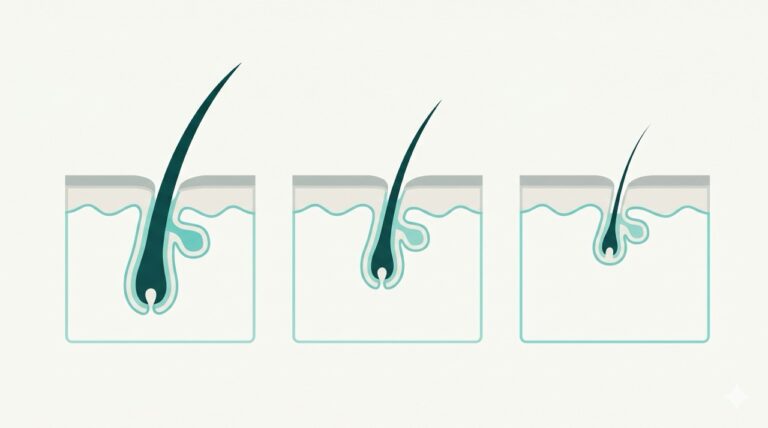
Both medicines belong to the same family: 5-alpha-reductase inhibitors. They work by lowering DHT, the hormone that gradually shrinks genetically sensitive hair follicles in male pattern baldness. Less DHT means less pressure on those follicles — which is how both can slow loss and, for some men, encourage regrowth. Same target, same basic idea.
Where they differ
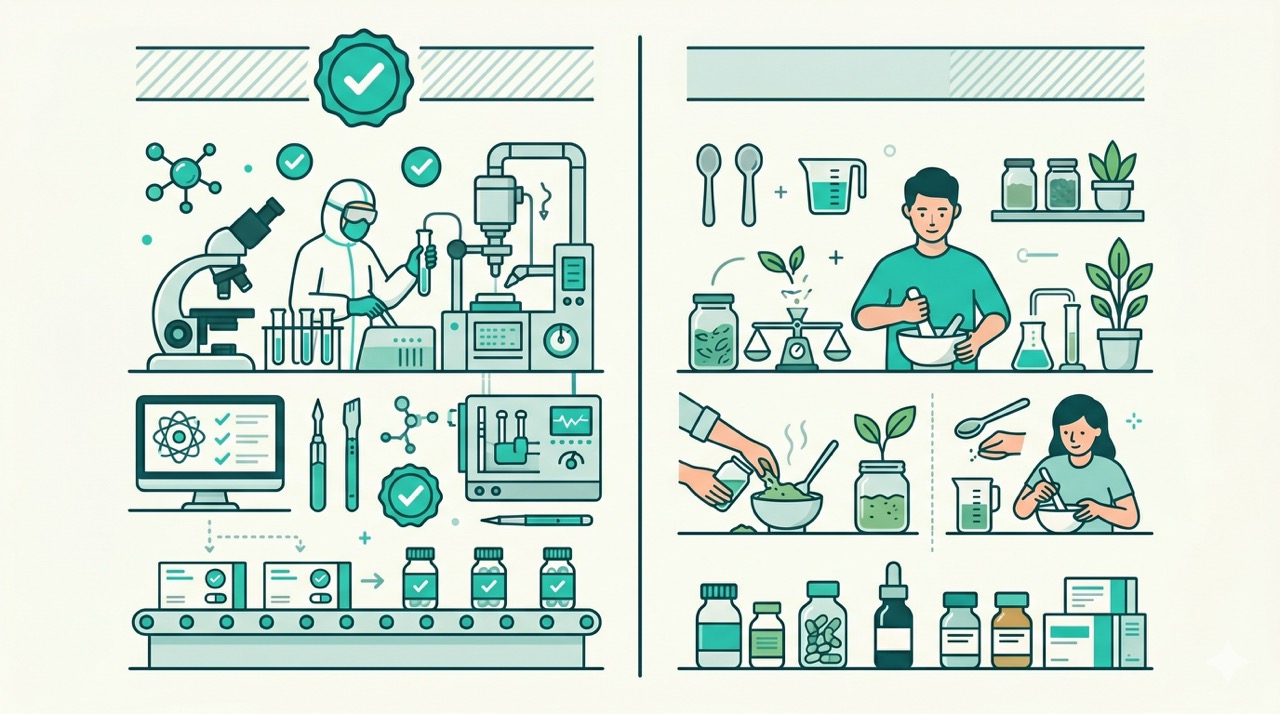
- Licensing. Finasteride (1mg) is licensed in the UK specifically for male pattern hair loss. Dutasteride is licensed for an enlarged prostate, not hair loss — so using it for hair is off-label.
- How much DHT they block. Finasteride blocks one form of the enzyme and lowers DHT by roughly 70%. Dutasteride blocks two forms and lowers it by around 90–95%.
- How long they linger. Dutasteride has a much longer half-life — it stays in the body far longer after the last dose, which matters for things like planning around fertility or stopping.
- Prostate blood tests. Both can lower PSA (a marker used in prostate screening), and dutasteride lowers it more — so your clinician needs to know you’re taking it when interpreting results.
⚠️ What “off-label” actually means. It’s when a clinician prescribes a licensed medicine for a use it isn’t specifically approved for. It’s legal and can be appropriate — doctors do it across medicine — but it’s a considered, individually-consented decision, not a casual “upgrade.” It also means there’s less hair-loss-specific regulatory data behind it than for finasteride.
So why is finasteride usually first?
A few sensible reasons line up here. It’s the option that’s actually licensed for this job, it has the largest body of hair-loss-specific evidence, and its effects and trade-offs are the best understood. For most men, it’s also simply effective enough.
Dutasteride tends to enter the conversation later — for example, when someone has genuinely given finasteride a fair run and not got the result they hoped for, and a clinician judges that more aggressive DHT suppression is a reasonable next step. That’s a clinical decision based on your specific situation, diagnosis and history — not a default everyone should jump to.
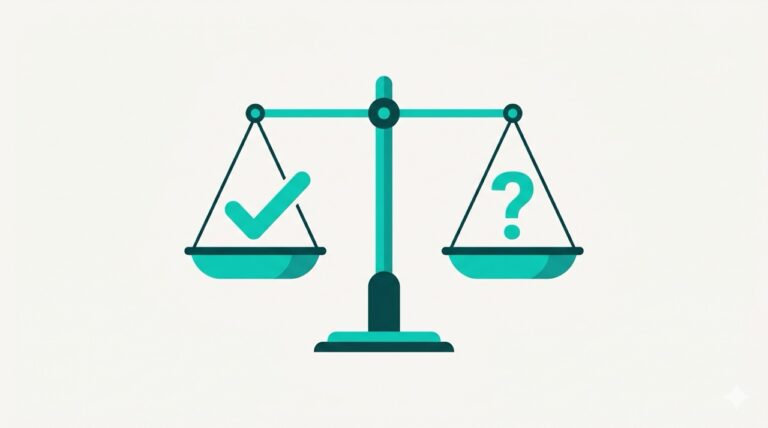
💡 “Stronger” ≠ “better for me.” Blocking more DHT isn’t a free win — it’s a different balance of potential benefit and potential side effects. The right question isn’t “which is more powerful?” but “which is the right fit for my situation?” That’s exactly what an assessment is for.
Side effects: same family, same caution
Because they work the same way, both carry the same class of risks: sexual side effects (such as lower libido or erection difficulties) and, less commonly, mood changes. The UK regulator has acted on both — finasteride carries a patient alert card highlighting the risk of sexual dysfunction, depression and suicidal thoughts, and the MHRA has now added a precautionary mood warning to dutasteride as a medicine in the same class.
One practical wrinkle: because dutasteride lingers far longer in the body, any side effects can take longer to clear after stopping. None of this should scare you off considering your options — it’s simply why the safety conversation belongs at the centre of the decision, whichever medicine comes up. (For a fuller look, see our guide to finasteride side effects.)
What’s normal, what to check, what’s urgent
This applies to either medicine. Keep it handy.
🟢 Usually nothing at all
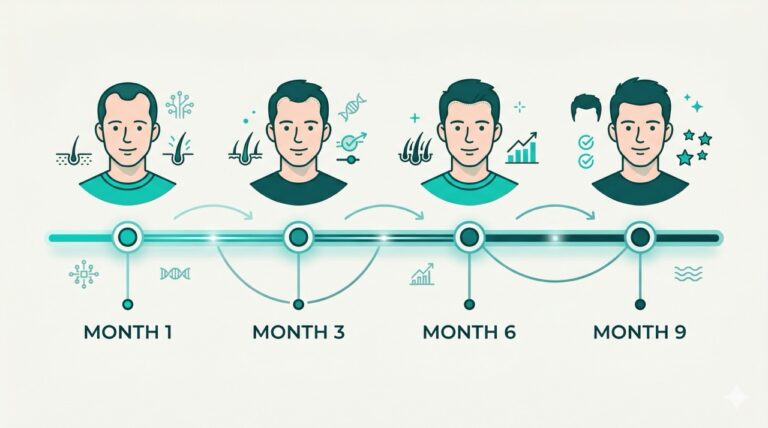
Most men take a DHT blocker without trouble. Results are slow either way (think months, not days), and that patience is normal — not a sign anything’s wrong.
🟠 Check in with your clinician
Any change to your sex drive, erections or ejaculation; new breast tenderness, swelling or a lump; or a planned prostate (PSA) blood test, so the result can be read correctly. Also tell us about allergies before starting — some capsule forms aren’t suitable if you have a soya or peanut allergy. Message your clinical team and we’ll review your plan.
🔴 Stop and get help straight away
If you ever notice low mood, depression, or any thoughts of harming yourself while taking a DHT-blocking medicine, stop the medicine and seek help right away — contact your clinician or GP, call 111, or 999 if you’re in immediate danger. You can also talk to the Samaritans free, any time, on 116 123. The same urgency applies to signs of a serious allergic reaction — swelling of the face, lips, tongue or throat, or trouble breathing.
Not sure which fits you?
That’s exactly the kind of thing a clinician should weigh up with you — not a blog. Start our online assessment and a Trimu clinician will look at your hair, your history and your goals, and talk you through the right option for your situation, licensed-first.
✨ Compare your own progress with “My Journey”
Whichever route you and your clinician choose, the only comparison that really matters is your hair against your own starting point. Inside your Trimu patient portal, My Journey lets you log progress photos over time, track how you’re feeling, flag any side effects the moment they appear, and message your clinical team if you want to revisit the plan. It’s how a treatment decision stays a managed one.
Frequently asked questions
Is dutasteride stronger than finasteride?
It suppresses more DHT, yes. But “stronger” isn’t the same as “better for you” — more suppression also shifts the balance of potential side effects. Which one suits you is a clinical judgement, not a league table.
Can I just start on dutasteride?
Usually finasteride comes first, because it’s the licensed, best-evidenced option for hair loss. Dutasteride is typically considered later and case-by-case — for instance if finasteride hasn’t delivered after a fair trial — and as an off-label decision made with a clinician.
What does “off-label” mean here?
It means prescribing a licensed medicine for a purpose it isn’t specifically approved for. Dutasteride is approved in the UK for an enlarged prostate, not hair loss, so hair-loss use is off-label. It’s legal and can be appropriate, but it’s a considered, consented choice.
Are the side effects worse with dutasteride?
They’re the same family of risks for both, and the regulator’s warnings now cover both. A practical difference is that dutasteride stays in the body much longer, so effects can take longer to settle after stopping.
Can I get either on the NHS for hair loss?
No — neither is available on the NHS for male pattern baldness, which is treated as a cosmetic condition. Both are accessed privately, following a consultation with a prescriber.
Can women take either of these?
No. Neither is licensed for women, and both should be avoided in anyone who is or could become pregnant. Female hair loss is assessed differently, so a tailored consultation is the right starting point.
Looking for something else?
We cover more than hair loss. Explore our other treatment pathways:
Medical disclaimer. This article is for general education and isn’t a substitute for personalised medical advice, nor a recommendation to use any specific medicine. Finasteride is licensed in the UK for male pattern hair loss; dutasteride is licensed for benign prostatic hyperplasia and is not licensed for hair loss, so any such use would be off-label and made solely at a prescriber’s clinical discretion following individual assessment and informed consent. Both are prescription-only medicines, are supplied only after consultation with a Trimu clinician, and are not for use by women, especially during pregnancy. Always read the patient information leaflet and any patient alert card supplied with your medicine, and report suspected side effects via the MHRA Yellow Card scheme (yellowcard.mhra.gov.uk). Trimu (AO Health Ltd) is registered with the Care Quality Commission (CQC). If you think you’re experiencing a medical emergency, call 999. Information last reviewed June 2026.