


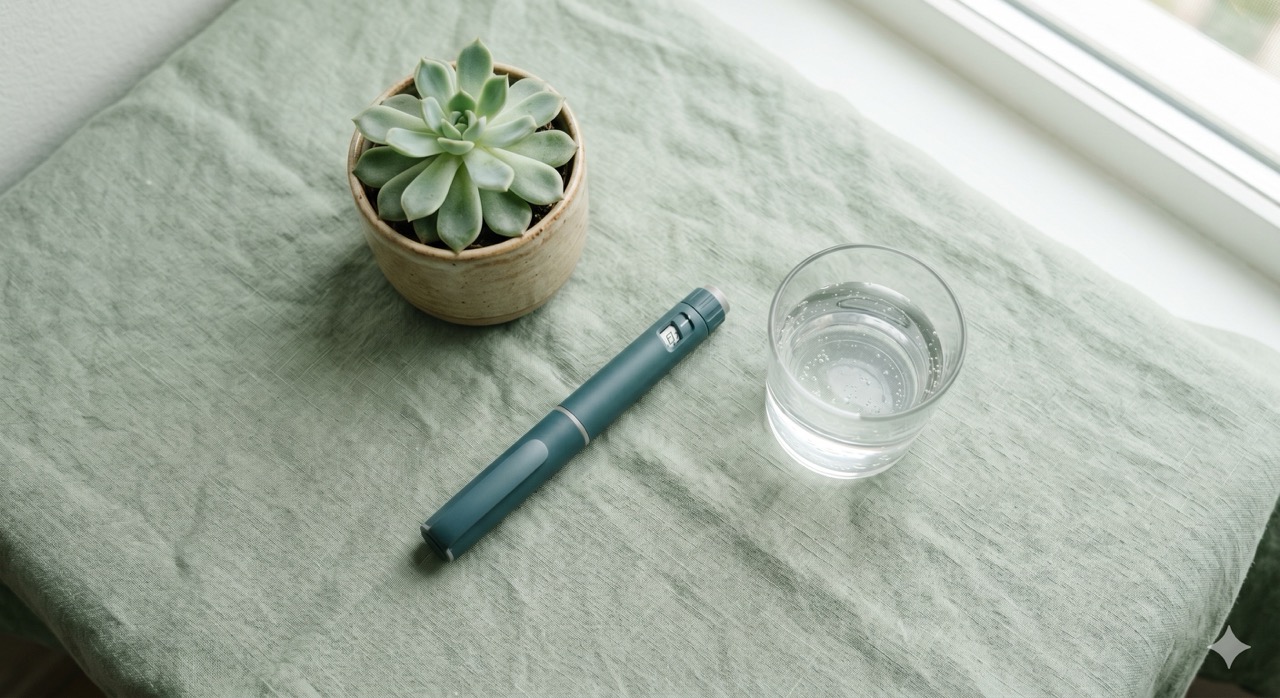
How to Inject Your GLP-1: Injection Sites, Rotation & What’s Normal
Starting a weekly GLP-1 — like semaglutide or tirzepatide — can feel like a big step, and for most people the injection is the bit that sounds scariest. Here’s the good news: it’s genuinely one of the simplest injections going. The needle is tiny, it sits just under the skin, and after a try or two it becomes a 30-second part of your week.
This guide walks you through where to inject, why rotating your sites matters, what’s normal afterwards, and when to flag something to your clinician — in plain English, no jargon overload.
The 30-second version
- Inject into the fatty layer just under the skin — tummy, thigh or upper arm.
- Rotate where you inject every time so the tissue stays healthy.
- A little redness, a small bump or mild itching is normal and usually settles fast.
- Your My Journey portal logs each injection and tells you the next site to use — so you never have to remember.
Quick note: This is general guidance, not personal medical advice. Always follow the instructions that come with your specific pen and the directions from your Trimu clinician.
First, the basics
Before you inject anything, run through this quick checklist:
- Wash your hands. Clean hands, clean injection — simple as that.
- Check the pen. Right medicine, in date, liquid looks clear, correct dose dialled in.
- Room temperature is comfier. If yours lives in the fridge, many people find injecting is gentler once the pen has warmed up a little — check your leaflet.
- Fresh needle every time if your pen uses screw-on needles. Never reuse.
- Have a sharps bin ready. Used needles never go in your household bin.
Where to inject: your three GLP-1 injection sites
GLP-1 medications are injected subcutaneously — into the soft, fatty layer just beneath the skin, not into muscle. You’ve got three reliable areas to choose from:
- Tummy (abdomen) — the most popular spot. Stay at least 5cm (about 2 inches) clear of your belly button in every direction.
- Front of the thighs — the upper, outer part of the thigh works well and is easy to reach.
- Back of the upper arms — great if you’ve got the flexibility, or someone to help.
Pinch a fold of skin if your leaflet recommends it, and insert the pen at the angle your instructions specify (usually straight in, at 90°). Pick somewhere with a bit of cushioning and skip anywhere bruised, broken, scarred or sore.
Why rotating injection sites actually matters
Here’s the part people often skip. If you inject the same spot week after week, the tissue underneath can become lumpy or hardened — the clinical word is lipohypertrophy. It’s not just cosmetic: those lumps can change how well the medicine is absorbed, which can affect how the treatment works for you.
The fix is easy — keep moving. Two simple rules:
- Rotate between zones — tummy one week, thigh the next, and so on (or at least move around plenty within a single zone).
- Keep each new injection 2–3cm away from your last one.
A handy trick: picture your tummy as a clock face and work your way around it over the weeks.
Never lose track with My Journey
Can’t remember where you injected last week? Your My Journey hub in the Trimu patient portal logs every injection for you, so your record is always there in your pocket. Even better, it suggests your next site in the rotation automatically — so you never double up on the same spot. One tap to log it, zero guesswork.
How to inject your GLP-1, step by step
- Choose your site — or check the next one My Journey suggests.
- Clean the area if advised, and let it dry fully.
- Prep the pen — remove the cap and attach a new needle as directed.
- Position the pen against the skin at the angle your instructions specify, pinching a skin fold if recommended.
- Press and hold. Keep the button down and count for as long as your pen tells you to (often around 5–10 seconds) so the full dose goes in.
- Withdraw, dispose, log. Drop the needle in your sharps bin, then tap it into My Journey. Done.
What’s normal at the injection site
A small reaction where you injected is common and usually completely harmless. You might notice:
- Mild redness or pinkness
- A small raised bump or slight swelling
- A bit of itching around the spot
- A tiny bruise
- A brief sting as the needle goes in
These usually settle within a few hours to a couple of days. A cool compress can soothe the area, and try not to rub or scratch it.
When to contact your clinician about your injection site
Totally normal — no action needed
Mild redness, a small bump, a light itch, a minor bruise, or a brief sting. Keep injecting as usual and remember to rotate your site.
Check in with your Trimu clinician
- A lump or hard area that isn’t going away
- Redness that’s spreading or feels warmer a day or two later
- Pain that lingers or gets worse
- Repeated, significant bruising
- Anything that simply doesn’t feel right to you
You can message your clinician straight from your My Journey portal.
Urgent — call 999 or go to A&E
Signs of a serious allergic reaction are rare, but they’re a medical emergency. Get urgent help if you notice swelling of the face, lips, tongue or throat, a widespread rash or hives, difficulty breathing, or feeling faint and dizzy.
A few pro tips to make life easier
- Same day, every week. Weekly GLP-1s work best on a steady schedule. Pick a day that fits your routine and stick with it.
- Never share pens or needles — not even with a partner. It’s an infection risk.
- Store it properly. Check whether yours needs the fridge, and how long it can safely stay out.
- Missed a dose? Don’t double up to catch up — message your Trimu clinician or check your guidance for what to do.
- Be kind to your skin. Avoid injecting into areas that are bruised, broken, scarred or tender.
GLP-1 injection FAQs
Does injecting a GLP-1 hurt?
Most people are surprised by how little they feel. The needle is very fine and short, so a brief sting is usually the most you’ll notice.
Can I inject in the same place every week?
Best not to. Rotating protects your skin and keeps the medicine absorbing consistently. My Journey tracks this for you and suggests your next spot.
I saw a small drop of blood — is that okay?
A tiny bit of blood or bruising is perfectly normal. Press gently with a clean tissue and resist the urge to rub.
What if I notice a hard lump?
Stop injecting into that spot and give it time to recover. If the lump doesn’t settle, contact your clinician.
Where’s the least painful place to inject?
Many people find the tummy the most comfortable, but it varies from person to person. Rotating your sites is a great way to discover your own favourites.
Ready to start your weight-loss journey?
Trimu keeps it simple: a quick online consultation with UK-registered clinicians, genuine medication delivered to your door, and the My Journey portal guiding every step — including your injection tracker and site rotation. No queues, no awkward conversations, just expert care that fits your life.
This article is for general information and education only and does not replace personalised advice from a qualified healthcare professional. Always read the patient information leaflet supplied with your medication and follow your clinician’s instructions. If you think you’re having a medical emergency, call 999.