

How Long Until Hair-Loss Treatment Works? (The Realistic Timeline)
You’ve started treatment, you’re checking the mirror daily, and… nothing yet. Sound familiar? Here’s the honest truth up front: hair-loss treatment works on hair time, not your time. It’s slower than you’d like — but knowing the real timeline (and what each stage means) is the best way to stop yourself quitting right before it pays off.
⏱️ The 30-second version
- The medicine starts working on DHT within weeks — but your hair takes months to show it.
- A spell of extra shedding early on is normal and often a sign things are moving.
- First signs usually appear at 3–6 months; the fuller picture lands around 12 months.
- Consistency is the single biggest factor. Skip doses or stop, and the clock resets.
- No change by around a year? That’s the point to review with your clinician, not before.
First, why hair is so frustratingly slow
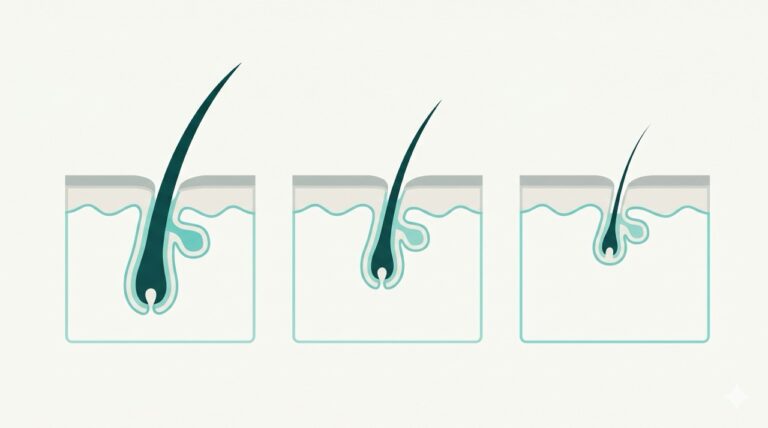
Hair grows about one centimetre a month — roughly half an inch — and it grows in cycles, not continuously. Each follicle has a long growth phase, a rest, and a shed, all running on their own schedule. Treatment can nudge follicles back toward healthy growth, but it can’t fast-forward biology. New, thicker hairs still have to grow out from scratch, and that simply takes time.
💡 The key mismatch: a DHT-blocking medicine can cut scalp DHT dramatically within the first few weeks — but you won’t see the benefit until the follicles it’s protected grow out visible hair months later. The work starts long before the results show.
The realistic timeline
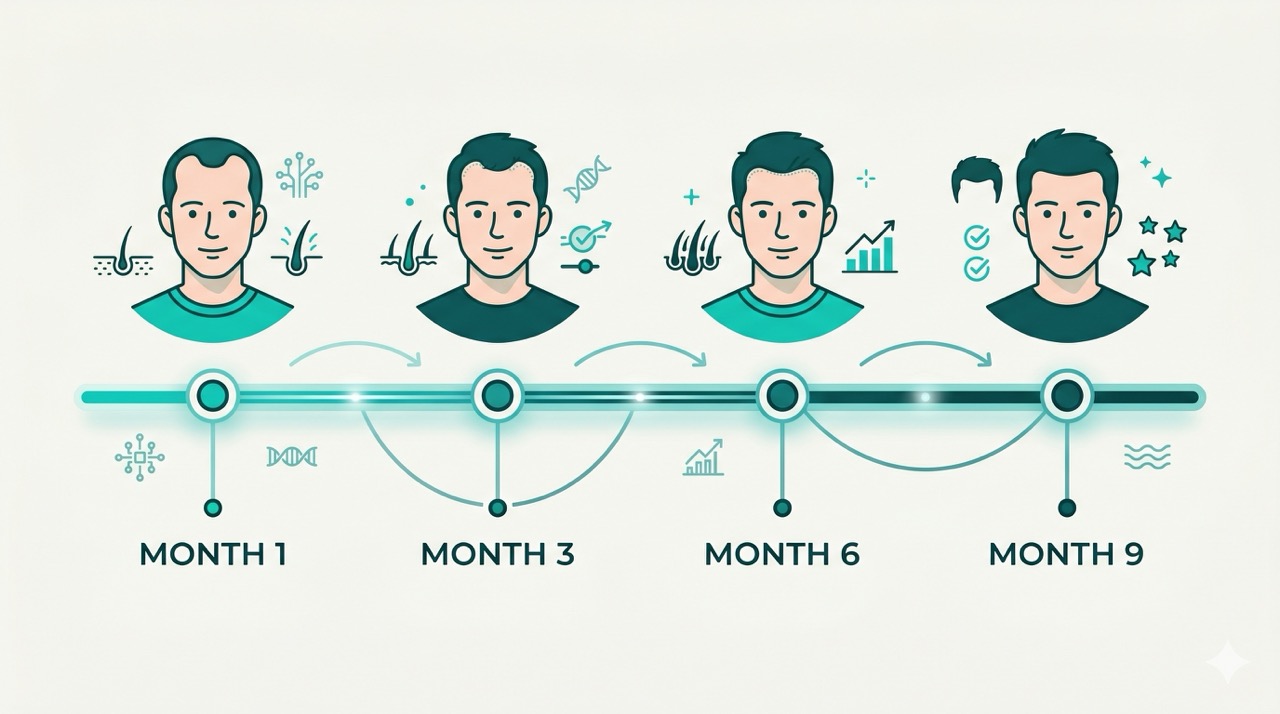
Everyone’s a little different, but here’s the shape of a typical first year. Use it as a map, not a stopwatch.
- Weeks 1–4 — behind the scenes. Nothing visible, and that’s expected. The medicine is already lowering DHT; your follicles just haven’t responded on the surface yet.
- Months 1–3 — the shedding phase. Many people notice more shedding around now. Counter-intuitive, but it’s usually old, weak hairs being pushed out to make way for stronger ones. It typically settles within a few weeks.
- Months 3–6 — first green shoots. Shedding slows, the rate of loss eases off, and some people spot early thickening — often around the hairline and temples first.
- Months 6–12 — the payoff window. This is where most visible improvement happens: denser, thicker hair, and changes other people may start to notice too.
- 12 months+ — the verdict and maintenance. Around a year is when you and your clinician can fairly judge how well it’s worked, and settle into keeping your gains.
⚠️ Don’t panic at early shedding. For most people it’s a temporary, expected part of the reset — not a sign of failure, and not a reason to stop. (For context, it’s normal to lose 50–100 hairs a day even without any treatment.) If shedding is heavy, comes in patches, or keeps going well beyond the first few months, that’s worth a message to your clinician to check nothing else is going on.
The one thing that decides your results: consistency
If there’s a single lever that matters most, it’s this. These treatments rely on steady, daily use to keep DHT down or blood flow up. Skipping doses drags the timeline out. And because the underlying process never goes away, stopping treatment means the gains gradually unwind over the following months — hair you protected slips back toward where it would have been.
⚠️ Make it a habit you can’t forget. Tie it to something you already do daily — brushing your teeth, your morning coffee. The people who get the best results are simply the ones who actually stuck with it for the full year.
What’s normal, what to check, what’s urgent
A quick traffic-light guide for the journey. Keep it handy.
🟢 Usually normal
A burst of extra shedding in the first couple of months, slow visible progress (real change takes 3–6 months to show), and some scalp dryness or irritation from topical treatment. Patience here is genuinely part of the treatment.
🟠 Check in with your clinician
Shedding that’s heavy, patchy, or still going strong past the first few months; any change to your sex drive or erections; persistent scalp irritation; or no improvement at all once you’re around the 12-month mark. Message your clinical team through your portal and we’ll review the plan.
🔴 Stop and get help straight away
If you ever notice low mood, depression, or any thoughts of harming yourself while taking a DHT-blocking medicine, stop the medicine and seek help right away — contact your clinician or GP, call 111, or 999 if you’re in immediate danger. You can also talk to the Samaritans free, any time, on 116 123. The same urgency applies to signs of a serious allergic reaction — swelling of the face, lips or throat, or trouble breathing.
The clock starts when you do
Every month you wait is a month off the far end of your timeline — and starting earlier protects more of what you’ve got. Take our quick online assessment and a Trimu clinician will help you figure out the right plan for your stage and goals.
✨ “My Journey” was built for exactly this
The hardest part of a slow timeline is that day-to-day change is invisible in the mirror — which is why so many people quit too early. Inside your Trimu patient portal, My Journey lets you snap a progress photo every 30 days and line them up side by side, so you see the trend instead of the daily noise. Add consistency reminders so you never miss a dose, and message your clinical team whenever you want a steer. It turns “I think it might be working?” into something you can actually see.
Frequently asked questions
I’m shedding more since I started — is it failing?
Usually the opposite. Early shedding is often a sign the treatment is kicking in, as weaker hairs make way for stronger ones. It typically settles within a few weeks to a few months. If it’s heavy or persistent, check in with your clinician.
When will other people notice?
Most people see changes others can spot somewhere in the 6–12 month window. You’ll usually notice the “less falling out” stage before you notice obvious regrowth.
Can I make it work faster?
There’s no real shortcut — the hair growth cycle sets the pace. The two things genuinely within your control are starting early and being consistent. Using complementary treatments together can improve results, but it won’t beat the biological clock.
I’m a few months in with nothing to show — should I give up?
No — that’s right on schedule. Visible change before 3–6 months is the exception, not the rule. The biggest mistake is quitting during the quiet early phase. Give it the full window, and lean on progress photos rather than the mirror.
What if there’s genuinely no change after a year?
Around 12 months is the fair point to take stock. If you’ve been consistent and still see no benefit, your clinician can review your plan and discuss alternatives or adjustments. That’s a conversation to have, not a reason to quietly stop.
Do the results last if I stop?
Only while you keep treating. The process that causes pattern hair loss doesn’t disappear, so stopping lets it resume and gains fade over the following months. Think of it as ongoing maintenance rather than a one-off fix.
Looking for something else?
We cover more than hair loss. Explore our other treatment pathways:
Medical disclaimer. This article is for general education and isn’t a substitute for personalised medical advice. Timelines are general guides and individual results vary. Hair-loss medicines referred to here are prescription-only and are supplied only after an online consultation with a Trimu clinician, who will confirm whether treatment is appropriate and safe for you. Always read the patient information leaflet and any patient alert card supplied with your medicine, and report any suspected side effects to your clinician or via the MHRA Yellow Card scheme (yellowcard.mhra.gov.uk). Trimu (AO Health Ltd) is registered with the Care Quality Commission (CQC). If you think you’re experiencing a medical emergency, call 999. Information last reviewed June 2026.